
Video Production & AI-supported Design
My Role: Lead Designer (Concept, graphics, video, and content development)
Artifact Description
This short video introduces learners to scholarly citation practices. It uses clear on‑screen text, simple motion graphics, and concise voice‑over narration. Each concept is presented visually and verbally to support different learning preferences. Sign‑posting guides learners without increasing cognitive overload.
The design emphasizes clarity and structure through clean visuals, consistent typography, and purposeful color cues. Following multimedia learning best practices, the video pairs narration with supportive, non-duplicative visuals. The tone is friendly and instructional, making the content approachable for learners new to citation.
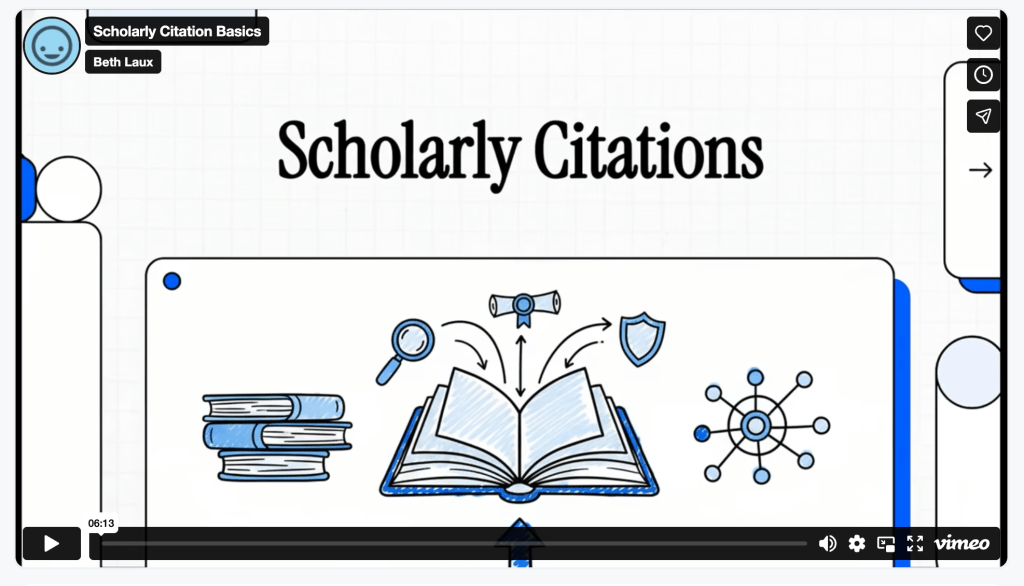
Video Link
More Information
Case Study Fast Facts
- Project Goals — Create a micro-learning asset that strengthens learners’ foundational research skills
- Target Audience — Students and employees developing practical research competencies
- Problem Statement — Learners lacked a structured, confidence‑building introduction to research methods, causing inconsistent skill application and uncertainty about how to begin
- Challenges Overcome — Tight timelines, variable learner motivation, and limited technical infrastructure while ensuring the content was engaging and accessible
- Instructional Design Process — Used an ADDIE‑informed, iterative approach: Rapid analysis, early storyboarding, prototype‑first development, and refinement with stakeholder feedback
- Design Solution — Produced a concise video that breaks down basic action steps into clear segments that limit cognitive load and leverage multimedia learning principles
- Tools and Approach — Used Copilot for content development, ideation, and scripting; Notebook LM for visual design; Camstasia for captioning; Vimeo for hosting; and generative AI for accessibility checks. Applied signaling, narration‑plus‑visuals, and step‑by‑step modeling.
- Evaluation and Impact — Collected SME feedback and learner performance indicators showed increased confidence, clearer understanding of research steps, and improved ability to execute citation tasks independently
- Reflection — Gained insight into designing for mixed‑motivation learners; learned to streamline content under tight timelines; would incorporate more learner testing in future iterations
- Conclusion — The final solution improved learner clarity and confidence, demonstrated effective use of multimedia learning principles, and showcased a scalable approach to foundational research instruction

